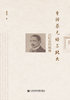
The Library of Congress · Public domain(via Wikimedia Commons)
Cai Yuanpei
Cai Yuanpei (January 11, 1868 - March 5, 1940), also known as Zhongshen, also known as Heqing, Minyou, Jiemin, nicknamed Junjun, nicknamed Yige, nicknamed Yike, and nicknamed Ah. Pei, who also used the pseudonyms Cai Zhen and Zhou Ziyu, male, from Shanyin County, Shaoxing Prefecture, Zhejiang Province (now Shaoxing City), originally from Zhuji, Shaoxing, was a modern Chinese revolutionist, educator, politician and translator. He served as Acting Chairman of the National Government of the Republic of China and is generally regarded as a pioneer in modern ethnological research in China. Cai Yuanpei became a Jinshi at the age of 25 and was appointed a scholar of the Hanlin Academy. He was the first Minister of Education of the Republic of China. From 1916 to 1927, he served as the president of Peking University. He revolutionized Peking University and launched an "academic" and "liberal" style. From 1920 to 1930, Cai Yuanpei also served as the president of the Sino-French University. During the Northern Expedition, after the Nationalist Government established Nanjing as its capital, he chaired the Educational Administration Committee, prepared the establishment of the University of the Republic of China and the Academia Sinica, and led the reform of the education and academic system. He is also a supervisory committee member of the Chinese Kuomintang. During the April 12th Incident, he took the lead in publishing the "Power Line to Protect the Party and Save the Nation", calling for the party to be purged. From 1928 to 1940, he served as the president of Academia Sinica, implementing his views on academic research. Cai Yuanpei was a generous and compassionate person with a thorough observation of Chinese society and customs. He twice studied in Europe and was intimately familiar with the spirit of Renaissance humanism and the ideological trends after the French Revolution. He "transferred Chinese culture and education from the era of feudal autocracy to the era of democracy and freedom." Set educational policies by hand and create a modern education system. Make Peking University academic and lay the foundation of Academia Sinica. Promote military-civilian education, materialism, civic ethics, outlook on life, world view, and aesthetic education. It advocates free thought, civil rights and women's rights, strives to get rid of the old custom of "study to become an official", and develops a scientific research atmosphere.
- Category
- Political figures
- Nationality
- Republic of China
- Born
- 1868-01-11
- Died
- 1940-03-05
- Wikidata
- Q19796