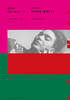
Pavel Zhukov · Public domain(via Wikimedia Commons)
Lenin
Vladimir Il'yich Ulyanov (Russian: Владимир Ильич Ульянов, Romanized: Vladimir Il'yich Ul'yanov (April 22, 1870 - January 21, 1924), commonly known as Lenin (Ленин, Romanized: Lenin), was a Russian communist revolutionary, politician, and thinker. He was the main founder of Soviet Russia and the Soviet Union, the founder of the Bolshevik Party, and the main leader of the October Revolution. He served as Chairman of Soviet Russia and the People's Commissar of the Soviet Union (1917-1924). The government he led won the Russian Civil War and established a democratic centralist socialist country under the leadership of the Bolsheviks (later the Communist Party of the Soviet Union). Lenin's ideological system is based on Marxism, and the political theory he developed is called "Leninism." Lenin was born into a middle-class family in Simbirsk (today's Ulyanovsk). After his brother Alexander Ulyanov was executed by the Tsar in 1887, he decided to embrace the political stance of revolutionary socialism. He received a law degree after being expelled from the Kazan Imperial University for his participation in protests against the tsarist autocracy in the Russian Empire. In 1893, he moved to St. Petersburg and became a senior cadre of the Russian Social Democratic Labor Party, advocating Marxism. In 1897, he was arrested on charges of sedition and was exiled to Shushenskoye for three years, during which time he married Nadezhda Krupskaya. He later moved to Western Europe and became a famous party theorist through his publications. In 1903, he played a key role in the ideological split in the Russian Social Democratic Labor Party, leading the Bolsheviks against Yuri Martov's Mensheviks. He inspired the outbreak of the Russian Revolution in 1905 and later campaigned to turn World War I into a proletarian revolution across Europe; as a Marxist, he believed that this would overthrow the capitalist mode of production and replace it with a socialist society. In 1917, the Russian February Revolution overthrew the Tsar and established the Russian Provisional Government, and Lenin returned to Russia. He later led the October Revolution, which enabled the Bolsheviks to overthrow the new regime and establish Soviet Russia. After the success of the revolution, the Bolsheviks led by Lenin formed the Council of People's Commissars (the highest administrative body), with some power held by the democratically elected All-Russian Congress of Soviets. A new government was elected for the Russian Constituent Assembly but was later deposed. After signing the Closing Ceremony with the Allied Powers
- Category
- Political figures
- Nationality
- russian empire
- Born
- 1870-04-10
- Died
- 1924-01-21
- Wikidata
- Q1394