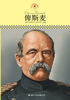
André Bockmann · Public domain(via Wikimedia Commons)
Otto von Bismarck
Otto Eduard Leopold von Bismarck (German: Otto Eduard Leopold von Bismarck; April 1, 1815 - July 30, 1898), also known as Graf von Bismarck-Schönhausen (1865), Prince Bismarck (Fürst von Bismarck) Bismarck; 1871), Duke of Lauenburg (Herzog zu Lauenburg; 1890), a German politician and diplomat who served as Prime Minister of the North German Confederation from 1867 to 1871. When the German Empire was founded in 1871, he became the first Prime Minister of the German Empire until his resignation in 1890. Bismarck was born into the Junker class and rose quickly as a diplomat during the reign of King William I of Prussia. During the Prussian constitutional crisis in 1862, he was appointed Prime Minister by William I. In his fight against the liberals, Bismarck ignored the existence of parliament. Externally, he launched successive wars against Denmark and Austria from 1864 to 1866, turning the Prussian-dominated Little Germany plan into the answer to Germany's problems. He also promoted the establishment of the German Empire through the Franco-Prussian War from 1870 to 1871. As Prime Minister of the German Empire, Bismarck was committed to the balance of power in Europe. After Bismarck came to power in 1861, his domestic policies can be roughly divided into two parts. First, he formed an alliance with moderate liberals and implemented many political reforms, including the introduction of civil marriage, in order to confront the Catholic Church. Beginning in 1870, Bismarck began to distance himself from liberals, turned to the implementation of protection policies and economic intervention policies, and established a social insurance system. In the 1880s, the Socialist Law was pushed to suppress socialists. Bismarck had many differences with Wilhelm II, who came to the throne in 1888, and Bismarck was dismissed by the latter in 1890. After retiring as Prime Minister, Bismarck still occupied a political place and often criticized the policies of his successors. In addition, he wrote an autobiography called "Memories and Thoughts" for himself, which described his many contributions to Germany and the German people in his memory, and how he would continue to contribute to Germany and the German people. Until the middle of the 20th century, historians had always had a very positive evaluation of Bismarck, calling him an "iron-blooded slayer".
- Category
- Political figures
- Nationality
- Kingdom of Prussia
- Born
- 1815-04-01
- Died
- 1898-07-30
- Wikidata
- Q8442