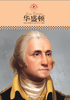
Gilbert Stuart · Public domain(via Wikimedia Commons)
George Washington
George Washington (English: George Washington; February 22, 1732 - December 14, 1799), the founding father of the United States, served as the first president of the United States from 1789 to 1797. He commanded the Continental Army to defeat the British Empire in the American Revolutionary War, led the revolutionaries to gain independence, and was honored as the "Father of the Founding" by later generations of Americans. Washington was born in the Virginia colony and served as commander of the Army of Virginia during the Anglo-French North American War. Later, he was elected as a member of the Virginia House of Commons to oppose the British crown's oppression of the colonies. After the Revolutionary War broke out in 1775, Washington was appointed commander-in-chief of the Continental Army. In March 1776, Washington won the siege of Boston, but was forced to evacuate New York in November of the same year. He then crossed the Delaware River in late 1776 and won the battles of Trident and Princeton, but was defeated at Brandywine and Germantown later that year. As the war dragged on, Washington began to face serious challenges such as doubts about its command ability, low morale, and lack of supplies. Finally, he led the American and French forces to achieve a decisive victory at the siege of Yorktown in 1781. The United Kingdom and the United States subsequently signed the Treaty of Paris in 1783, and Britain officially recognized the United States as an independent country. In 1787, Washington served as chairman of the Constitutional Convention and presided over the drafting of the current U.S. Constitution. In 1788 and 1792, Washington won the unanimous vote of the Electoral College twice and was re-elected as president for two terms. He established a strong and financially sound national government and remained neutral during the bitter battles between cabinet members Thomas Jefferson and Alexander Hamilton. During the French Revolution, he announced a policy of neutrality and supported the signing of the Jay Treaty with Britain. Washington set many lasting examples for the presidency, including the establishment of republicanism, the peaceful transition of power, the use of the title "Mr. President," and the tradition of two terms in office. His "Farewell" in 1796 became a classic treatise on republicanism, emphasizing the importance of national unity and warning of the threats to the country from regionalism, partisanship, and foreign powers. As a tobacco and wheat planter at Mount Vernon, Washington owned many slaves; but in his later years, he began to oppose slavery and stipulated in his will that the slaves in his name be freed. Washington's image has become a symbol of American culture and is extremely widely commemorated. Geographic names named after him include the nation's capital and the state of Washington. In various folk and academic polls
- Category
- Political figures
- Nationality
- kingdom of great britain
- Born
- 1732-02-22
- Died
- 1799-12-14
- Wikidata
- Q23