William Henry credited as photographer in the Woman Citizen issue where this photo appeared. · Public domain(via Wikimedia Commons)
Henrietta Leavitt
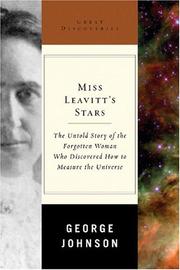
Henrietta Swan Leavitt (English: Henrietta Swan Leavitt, July 4, 1868 – December 12, 1921) was an American astronomer and a graduate of Radcliffe College. Since 1893, she worked as a calculator at the Harvard University Observatory, responsible for monitoring photosensitive films and calculating and recording the brightness of various stars. LeWitt's most famous achievement is the discovery of the period-to-perimeter relationship of Cepheids. This discovery was not recognized during her lifetime, but it enabled subsequent astronomers to calculate the distances between Earth and distant galaxies. After LeWitt's death, astronomer Hubble used the periodic light relationship of Cepheid variables, together with the spectral changes first measured by astronomer Vesto Sriver at the Lowell Observatory, to discover that the Milky Way is not the only galaxy in the universe, and that the universe has always been expanding. This is the famous Hubble's law.
- Category
- Scientists
- Nationality
- United States
- Born
- 1868-07-04
- Died
- 1921-12-12
- Wikidata
- Q110181