Marian Wood Kolisch, Oregon State University Restored by Adam Cuerden · CC BY-SA 2.0(via Wikimedia Commons)
Ursula Le Guin
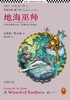
Ursula Kroeber Le Guin (English: Ursula Kroeber Le Guin, née Kroeber, October 21, 1929 - January 22, 2018) was an American writer, famous for her fantasy literary works, including her science fiction series set in the Hanxing universe, and her Earthsea fantasy series. She began publishing in 1959, and her literary career spans nearly 60 years. She has written more than 20 novels and more than 100 short stories, as well as poetry collections, literary criticism, translations and children's books. Although often regarded as a science fiction writer, Le Guin has also been hailed as "an important voice in American literature", but she herself prefers to be called an "American novelist". Le Guin was born in Berkeley, California, to the writer Theodora Kluber and the anthropologist Alfred Kluber. After earning a master's degree in French, she studied for a doctoral degree, but decided to discontinue her studies in 1953 after marrying the historian Charles Le Guin. In the late 1950s, she began writing full-time, and won critical acclaim and market success with "A Wizard of Earthsea" (1968) and "The Left Hand of Darkness" (1969), both of which Harold Blum hailed as her masterpieces. With The Left Hand of Darkness, she became the first female writer to win both the Hugo Award and the Nebula Award for Best Novel. Since then, she has successively created more works set in Earthsea or Ikumen. She has also written novels about the fictional country of Orsinia, and published many children's books and anthologies. Le Guin's work is deeply influenced by cultural anthropology, Taoism, feminism, and the work of Carl Jung. Her works often feature anthropologists or cultural observers as protagonists, and she incorporates the concepts of balance and harmony emphasized by Taoism in many of her novels. She often subverts the narrative patterns of traditional fantasy literary works, such as using non-white people as protagonists in the Earthsea series to break existing stereotypes; she is also good at using unusual styles or structural techniques, such as the 1985 experimental work "Forever Home". Her novels often explore social and political issues, covering topics such as race, gender, sexuality, and growing up. She also considered alternative political systems in several works, such as the 1973 philosophical short story "The Man Leaving Omela" and the 1974 novel "Nothing", which depicts an anarchist utopia. Le Guin's works have had a profound influence in the field of fantasy literature
- Category
- Writers
- Nationality
- United States
- Born
- 1929-10-21
- Died
- 2018-01-22
- Wikidata
- Q181659