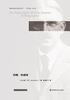
Eva Watson-Schütze · Public domain(via Wikimedia Commons)
John Dewey
John Dewey (English: John Dewey, October 20, 1859 - June 1, 1952) was an American philosopher, educator, and psychologist. Together with Charles Sanders Peirce and William James, he is considered an important representative of American pragmatism philosophy. He is also regarded as one of the founders of modern education and one of the founders of functionalist psychology. During his academic career, Dewey taught for a long time at the University of Michigan, the University of Chicago, and Columbia University, and retired at Columbia University. Throughout his life, Dewey strongly advocated the democratic system and emphasized the complementarity of science and democracy. Democratic thought was the theme of many of his works. At the same time, he is also regarded as one of the greatest educational reformers of the twentieth century. While teaching at the University of Chicago, he founded the Experimental School Affiliated to the University of Chicago in 1896 as an experimental base for his educational theories, and his wife served as the principal of the school. Dewey's thought had a significant impact on China's educational and ideological circles in the early twentieth century, and he cultivated a number of Chinese masters and scholars including Hu Shi, Feng Youlan, Tao Xingzhi, Guo Bingwen, Zhang Boling, Jiang Menglin and others. He also visited China and held hundreds of lectures across the country in two years. He witnessed the May Fourth Movement and met with Sun Yat-sen, which promoted the spread of democratic and scientific ideas in China. Dewey was one of the most famous scholars in the United States in the first half of the twentieth century. In December 2006, the well-known American magazine "The Atlantic Monthly" ranked Dewey 40th among "The 100 Most Influential Figures in American History".
- Category
- Scholars
- Nationality
- United States
- Born
- 1859-10-20
- Died
- 1952-06-01
- Wikidata
- Q131805